
 There is something so grounding (pun intended) and satisfying about digging your hands into the soil to grow your own food! Agriculture is one of the world’s oldest activities, and today, is one of the most popular hobbies. Gardening. enables a whole circle of wellness and green living that has so many
BENEFITS FOR THE WHOLE FAMILY
– .You know where your food comes from and what went into it.
– You can choose organic food processing that is safer with no pesticides or false-ripening agents.
– The smaller the gap from farm to fork, creates the healthiest foods.
– It’s healthy for your soul to get out into nature and make something grow.
– Growing Food is a great way to educate children about where their food comes from, plants, nature, science, and especially nutrition.
There is something so grounding (pun intended) and satisfying about digging your hands into the soil to grow your own food! Agriculture is one of the world’s oldest activities, and today, is one of the most popular hobbies. Gardening. enables a whole circle of wellness and green living that has so many
BENEFITS FOR THE WHOLE FAMILY
– .You know where your food comes from and what went into it.
– You can choose organic food processing that is safer with no pesticides or false-ripening agents.
– The smaller the gap from farm to fork, creates the healthiest foods.
– It’s healthy for your soul to get out into nature and make something grow.
– Growing Food is a great way to educate children about where their food comes from, plants, nature, science, and especially nutrition. 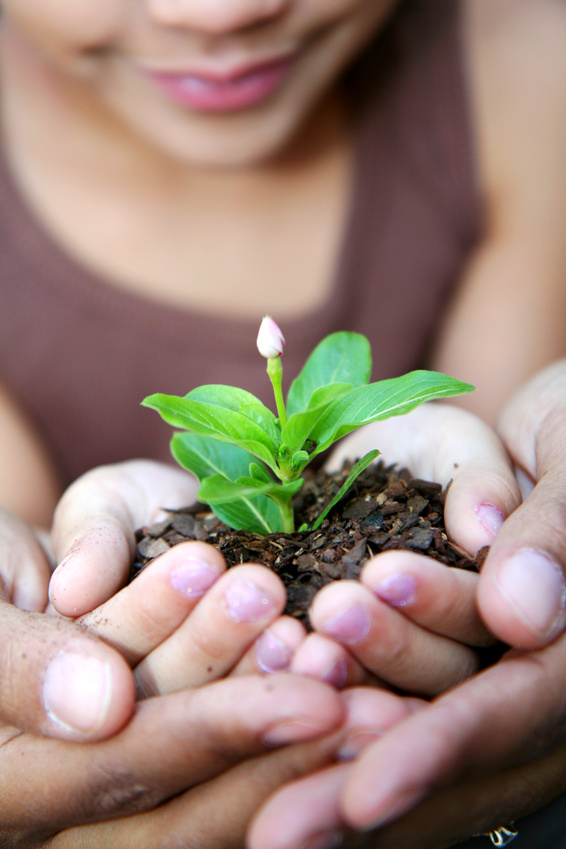 – For children and even adults, it is an empowering activity to “create” and grow your own food.
– Involving children in nature is very healthy for them mentally and engaging when they can cultivate something that slowly grows (unlike the instant gratification of TV/computers).
– Seemingly boring nutritious foods now have depth and interest! The kiddies will be excited to eat the food they grew (yes, even the green vegetable that used to be “yucky”)!
HOW TO
Gardening is really not as difficult and complex as one might think – you basically need soil, water and sunlight. So, stop making it so complicated! The below Simple step-by-step guide will help.
1) PICK A PLACE FOR PLANTING
Choose an indoor or outdoor area that gets at least 6 hours of sun a day. Position your garden in an area accessible for watering and harvesting. In the winter, grow your plants indoors using a grow light.
2) CHOOSE YOUR FRUITS AND VEGETABLES
Of course plant vegetable that your family will eat and that you have space for. Also, be sure you read the plant’s label for how far apart the plants need to be and how deep the soil. As a general rule, allow 1 sqft per plant and 1ft-1.5ft deep. I think it’s a lot easier to use starter plants rather than seeds. It will certainly speed up the process, but you may want to at least explain to your child that the plant started as a tiny seed. Stores will carry starter plants that are in season, so you will not have to research the plants’ growing times, like you would with seeds.
3) CONTAINER IT OR GROUND IT?
– CONTAINER GARDENS
If you don’t have much room for a yard garden, container gardens are perfect for small spaces and growing a few favorites. You can get crafty – make the containers look like your kitchen dishes, soup/salad bowls, or something that resembles food containers. You can paint the vegetable on the pot or on a popsicle stick. When growing with children, it is important to make the connection that this will grow into what you eat. There is also something to be said about how easy and inexpensive container gardens. Go cheap and easy — You can use a baby pool, bucket, or pot. Just be sure you poke some holes in bottom for drainage (plant will leak). When choosing a container, be sure to consider the space needed per vegetable.
-IN-GROUND GARDENS
If you choose to have the garden in the earth, be sure you dig out the top layer of dirt. You will not want to plant directly into the ground when growing food – there could be all kinds of toxins, seeds, and weeds. To save your back some digging, just take off about 2 inches and then add. stones or bricks that you fill in with soil.
4) PLANTING TIME:
Fill container or ground area with vegetable soil or compost. Be sure the soil is safe for growing food. Then use the plant’s label or google to see how far apart the plant should be from another. You would be surprised how BIG some of these plants get, especially squash, zucchini, and cucumbers. Label the plants somehow – time to get creative, or use the stick that came with the plant.
5) WATER OFTEN
Water the soil with a watering can or hose on the gentlest setting. You want to keep the soil moist, but not too powerful to
– For children and even adults, it is an empowering activity to “create” and grow your own food.
– Involving children in nature is very healthy for them mentally and engaging when they can cultivate something that slowly grows (unlike the instant gratification of TV/computers).
– Seemingly boring nutritious foods now have depth and interest! The kiddies will be excited to eat the food they grew (yes, even the green vegetable that used to be “yucky”)!
HOW TO
Gardening is really not as difficult and complex as one might think – you basically need soil, water and sunlight. So, stop making it so complicated! The below Simple step-by-step guide will help.
1) PICK A PLACE FOR PLANTING
Choose an indoor or outdoor area that gets at least 6 hours of sun a day. Position your garden in an area accessible for watering and harvesting. In the winter, grow your plants indoors using a grow light.
2) CHOOSE YOUR FRUITS AND VEGETABLES
Of course plant vegetable that your family will eat and that you have space for. Also, be sure you read the plant’s label for how far apart the plants need to be and how deep the soil. As a general rule, allow 1 sqft per plant and 1ft-1.5ft deep. I think it’s a lot easier to use starter plants rather than seeds. It will certainly speed up the process, but you may want to at least explain to your child that the plant started as a tiny seed. Stores will carry starter plants that are in season, so you will not have to research the plants’ growing times, like you would with seeds.
3) CONTAINER IT OR GROUND IT?
– CONTAINER GARDENS
If you don’t have much room for a yard garden, container gardens are perfect for small spaces and growing a few favorites. You can get crafty – make the containers look like your kitchen dishes, soup/salad bowls, or something that resembles food containers. You can paint the vegetable on the pot or on a popsicle stick. When growing with children, it is important to make the connection that this will grow into what you eat. There is also something to be said about how easy and inexpensive container gardens. Go cheap and easy — You can use a baby pool, bucket, or pot. Just be sure you poke some holes in bottom for drainage (plant will leak). When choosing a container, be sure to consider the space needed per vegetable.
-IN-GROUND GARDENS
If you choose to have the garden in the earth, be sure you dig out the top layer of dirt. You will not want to plant directly into the ground when growing food – there could be all kinds of toxins, seeds, and weeds. To save your back some digging, just take off about 2 inches and then add. stones or bricks that you fill in with soil.
4) PLANTING TIME:
Fill container or ground area with vegetable soil or compost. Be sure the soil is safe for growing food. Then use the plant’s label or google to see how far apart the plant should be from another. You would be surprised how BIG some of these plants get, especially squash, zucchini, and cucumbers. Label the plants somehow – time to get creative, or use the stick that came with the plant.
5) WATER OFTEN
Water the soil with a watering can or hose on the gentlest setting. You want to keep the soil moist, but not too powerful to  hurt the delicate plant. Water often and thoroughly when the surface of the soil is dry and light in color. Note: Plants that are grown in containers dry out faster than plants rooted in the earth.
6) HAPPY HARVESTING
Thin container gardens by harvesting your sprouts. Leave only a few plants on vine to reach maturity because you may not have enough room for all sprouting plants to fully grow in small areas. Be sure to keep an eye on your crops – some vegetables may spring up “overnight” and you will have a small window to harvest at their prime. Lettuce and broccoli are two plants that I have often missed out on and are not very good when overgrown, even a couple days.
~~~~~~~~~~~~~~~~~~~~~~~~~~~~~~~~~~~~~~~~~~~~~~~~~~~~~~
LEARN AS YOU GROW – NUTRITION LESSONS
The U.S. Department of Agriculture Helps Make Nutrition Education Fun For Kids! Visit their page for all levels of education at http://blogs.usda.gov/2013/06/25/usda-helps-make-nutrition-education-fun-for-kids/
USDA stated, “Research shows that students with healthful eating patterns tend to do better in school, and it’s important that children begin learning about food and nutrition when they’re young. In support of that goal, the Food and Nutrition Service recently released three free sets of curriculum educators can use to empower children to make healthful food choices and develop an awareness of how fruits and vegetables are grown.
For younger children, the USDA Food and Nutrition Service recently updated “Grow It! Try It! Like It!”: http://www.fns.usda.gov/tn/team-nutrition. Check it out! Preschool Fun with Fruits and Vegetables links activities at child care centers with resources for use at home. Since routine food choices for young children are determined by their families and adult care givers, encourage children to try new fruits and vegetables again and again. Children are taught to touch, smell, and taste new fruits and vegetables. The curriculum also integrates planting activities to help little ones connect the delicious food choices at the table with the different growing conditions and plants that produce fruits and vegetables.
MY GROWING EXPERIENCE
I was first inspired to grow food during my work at the Camden Children’s Garden, where I worked for almost a decade. There, I witnessed firsthand, the incredible ripple-effect that growing food had on the poorest, most dangerous US city, Camden, NJ. In addition, I personally knew several families that had learned how to grow their own food at a young age and proved to be a part of their adult lives and even passed to their children. It’s also a great family outing to go to a place like the Camden Children’s Garden, farm or nature center to learn about plants, nature and food.
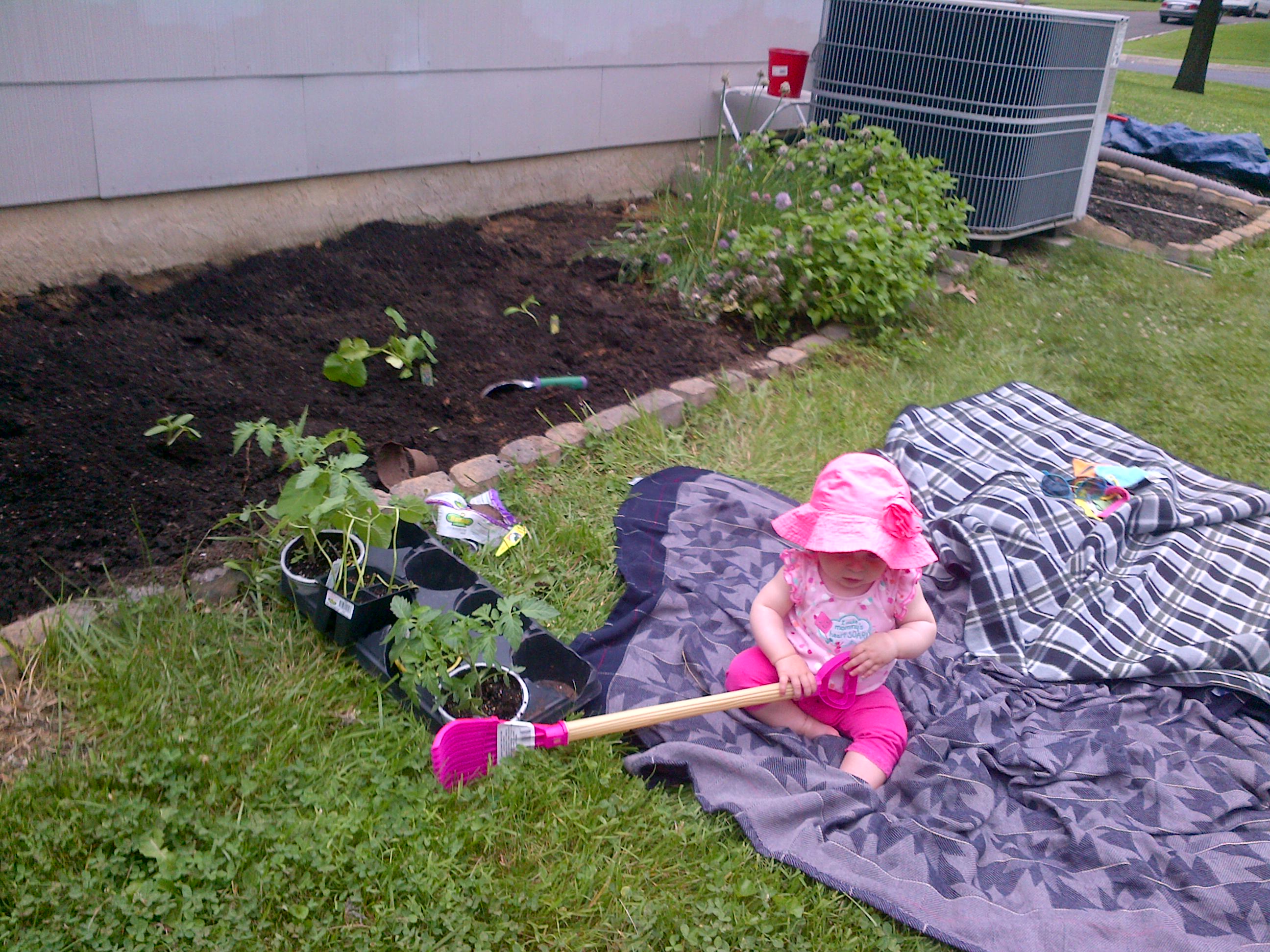
So yeh, I may be late in the growing season, but we are officially gardeners again! My baby and my husband sat there together planting the crops. I showed a photo of what the food looks fully grown and said the name of plant, “squash”, “tomato”, etc. It may also be a good idea to have some of the veggies for your child to taste when doing the planting and/or cultivating. Planting again made me feel so wholesome and accomplished – it was a great experience and I look forward to seeing the plants grow as my child does too. Stay tuned – we’ll be sharing our progress.
So, no more excuses, start that garden today. Your backyard will become its own educational workshop and food source to feed your family mind, body and soul! !
Happy Gardening Planting Peops!
hurt the delicate plant. Water often and thoroughly when the surface of the soil is dry and light in color. Note: Plants that are grown in containers dry out faster than plants rooted in the earth.
6) HAPPY HARVESTING
Thin container gardens by harvesting your sprouts. Leave only a few plants on vine to reach maturity because you may not have enough room for all sprouting plants to fully grow in small areas. Be sure to keep an eye on your crops – some vegetables may spring up “overnight” and you will have a small window to harvest at their prime. Lettuce and broccoli are two plants that I have often missed out on and are not very good when overgrown, even a couple days.
~~~~~~~~~~~~~~~~~~~~~~~~~~~~~~~~~~~~~~~~~~~~~~~~~~~~~~
LEARN AS YOU GROW – NUTRITION LESSONS
The U.S. Department of Agriculture Helps Make Nutrition Education Fun For Kids! Visit their page for all levels of education at http://blogs.usda.gov/2013/06/25/usda-helps-make-nutrition-education-fun-for-kids/
USDA stated, “Research shows that students with healthful eating patterns tend to do better in school, and it’s important that children begin learning about food and nutrition when they’re young. In support of that goal, the Food and Nutrition Service recently released three free sets of curriculum educators can use to empower children to make healthful food choices and develop an awareness of how fruits and vegetables are grown.
For younger children, the USDA Food and Nutrition Service recently updated “Grow It! Try It! Like It!”: http://www.fns.usda.gov/tn/team-nutrition. Check it out! Preschool Fun with Fruits and Vegetables links activities at child care centers with resources for use at home. Since routine food choices for young children are determined by their families and adult care givers, encourage children to try new fruits and vegetables again and again. Children are taught to touch, smell, and taste new fruits and vegetables. The curriculum also integrates planting activities to help little ones connect the delicious food choices at the table with the different growing conditions and plants that produce fruits and vegetables.
MY GROWING EXPERIENCE
I was first inspired to grow food during my work at the Camden Children’s Garden, where I worked for almost a decade. There, I witnessed firsthand, the incredible ripple-effect that growing food had on the poorest, most dangerous US city, Camden, NJ. In addition, I personally knew several families that had learned how to grow their own food at a young age and proved to be a part of their adult lives and even passed to their children. It’s also a great family outing to go to a place like the Camden Children’s Garden, farm or nature center to learn about plants, nature and food.
So yeh, I may be late in the growing season, but we are officially gardeners again! My baby and my husband sat there together planting the crops. I showed a photo of what the food looks fully grown and said the name of plant, “squash”, “tomato”, etc. It may also be a good idea to have some of the veggies for your child to taste when doing the planting and/or cultivating. Planting again made me feel so wholesome and accomplished – it was a great experience and I look forward to seeing the plants grow as my child does too. Stay tuned – we’ll be sharing our progress.
So, no more excuses, start that garden today. Your backyard will become its own educational workshop and food source to feed your family mind, body and soul! !
Happy Gardening Planting Peops!

 Plants Power Purpose
One thought on “#WellMOMblogs ~ Backyard Gardens Grow Health, Education and Green Lifestyle for the Whole Family — Mind, Body and Soul”