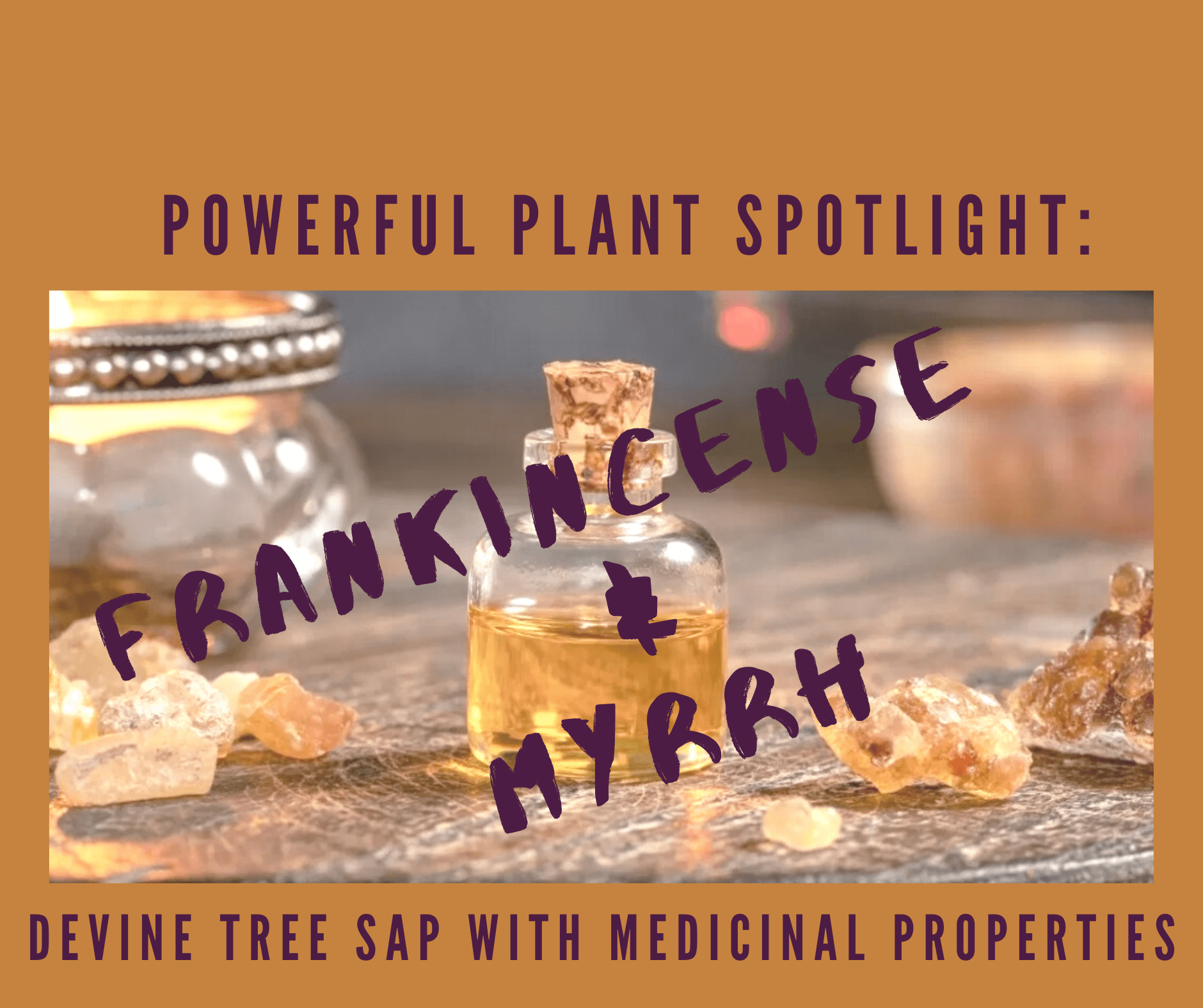

Frankincense & Myrrh
Many know that Frankincense and Myrrh were two of the gifts given by the wisemen to Baby Jesus after traveling afar from the East following His star. What many don’t know is how valuable Frankincense and Myrrh were in ancient days, as a sacred anointing oils, in addition to tons of health benefits the plant still has today!

Below are a few good articles about the importance and value of these plants then and now!
Click to read Healthline’s 5 science-backed benefits of frankincense — as well as 7 myths.

Frankincense, also known as olibanum, is made from the resin of the Boswellia tree. This tree typically grows in the dry, mountainous regions of India, Africa, and the Middle East.
Frankincense has a woody, spicy smell and can be inhaled, absorbed through the skin, or taken as a supplement. We do all of the above, and diffuse frankincense essential oils and have a resin burner if you really want your home to smell like a church or a meditation zen den. We also use frankincense in perfumes, room sprays, bath salts and in topical essential oil rollers diluted with coconut carrier oil.
Used in traditional holistic medicine, frankincense appears to offer certain health benefits, from improved arthritis and digestion to reduced asthma and better oral health. It may even help fight certain types of cancer, is one of the ancient health remedy for thousands of health issues.
Here are 11 Surprising Benefits and Uses of Myrrh Oil
You may be familiar with myrrh from Biblical stories even if you’re not sure what it is.
Myrrh is a reddish-brown dried sap from a thorny tree — Commiphora myrrha, also known as C. molmol — that is native to northeastern Africa and southwest Asia (1, 2).
A steam distillation process is used to extract myrrh essential oil, which is amber to brown in color and has an earthy scent (3).
Myrrh has long been used in traditional Chinese medicine and Ayurvedic medicine. Scientists are now testing the oil’s potential uses, including for pain, infections, and skin sores (4). Scientists now know the oils kill bacteria and other microbes (5).
###

 Plants Power Purpose